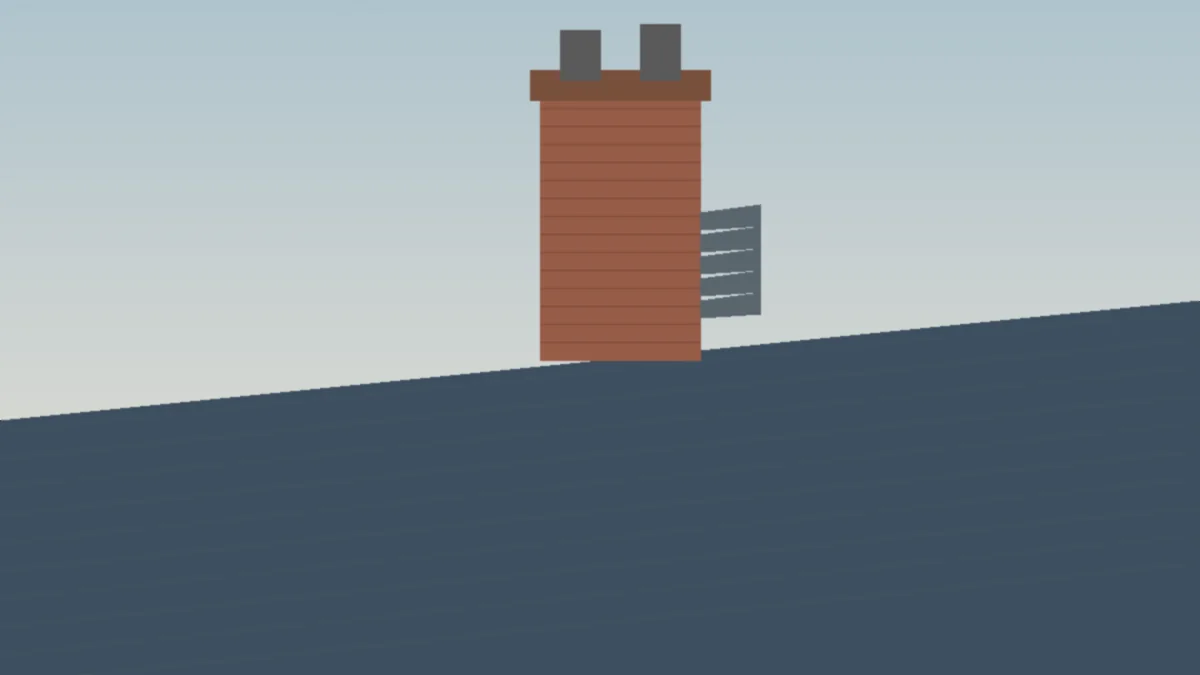
A damp patch on a chimney breast is one of the more misread problems in a house. It looks like “damp”, or sometimes like a roof leak in the usual sense, but the water is often coming in at the stack itself: wasted pointing, cracked flaunching around the pots, or lead flashings that have split or pulled away. Quoting the wrong part of that puzzle is how a chimney gets pointed and still weeps in the next westerly.
Summit Roofing looks at chimney repairs and leadwork together, because on most leaking stacks the two travel as a pair.
Three places water gets in
Flaunching. This is the mortar haunching around the pots at the top of the stack. When it cracks, water runs down into the brickwork and can travel a long way before it shows. Reforming the flaunching so that water sheds off the pots is a common, worthwhile repair when the rest of the stack is sound.
Pointing. The exposed faces of a chimney take the weather first, especially on open West Wales roofs. Loose, washed-out joints let water into the stack. Repointing is not a cosmetic smear over failed mortar: the loose material has to come out, and the new mix has to suit the brick or stone. A very hard mortar on old, softer masonry can do more harm than good.
Flashings. Soakers, step flashings, a back gutter behind the stack, or a cover flashing against a rendered upstand — these are the junctions with the roof. Lead that has fatigued, been dressed too thin, or replaced with a short strip of self-adhesive flashing is a classic leak. A tidy stack with tired lead will still wet the breast.
How it shows up in the house
You might see staining on the chimney breast, a drip that only appears in wind-driven rain, or dark timber in the loft where the stack comes through. It may not drip in the room at all. Photographs of the stack from the ground, and of the staining inside, are a useful start, as with other roof repairs.
When a rebuild is safer
If the stack is leaning, the brickwork is badly spalled, or earlier repairs have already left it as a patchwork, taking the stack down to a sound line and rebuilding it can be the safer option. Typical UK guide figures put repointing and flaunching somewhere around £400 to £1,500, a chimney flashing job around £300 to £1,200, and a rebuild in a higher band, often £1,500 to £4,500 or more, depending on height and access. Those are guide ranges, not a quotation. Scaffolding is often the item that moves them.
What to do next
Stay off the stack. Send photographs and a postcode via the quote form, or call 07712 442155. On a survey we will say whether the pointing, the flaunching, the lead, or a combination is the job — and whether the rest of the roof should be looked at while there is already access, as described in how we work.