Ridge tiles bedded on mortar are one of the first things a westerly takes off a roof. If you have been out after a gale counting the pieces in the garden, you are not alone. Around Llanelli and along the more exposed coasts and ridges of West Wales, this is a regular conversation: re-bed the mortar again, or fit a dry ridge?
Why mortar ridges fail
A traditional ridge relies on the mortar bed staying intact through frost, movement and wind uplift. On a sheltered inland roof it can last well. On an exposed pitch it often does not. Once a ridge tile slides or the bed shrinks and cracks, water and wind get into the head of the pitch. The next storm has an easier job than the last one.
Re-bedding is a fair repair when the rest of the roof is sound and the exposure is modest. It is a weaker answer on a roof that has already had the same ridge pointed up more than once, or on a coastal house where the wind is part of the specification, not a rare event. The West Wales weather note is the wider context; this article is about the ridge itself.
What a dry ridge actually is
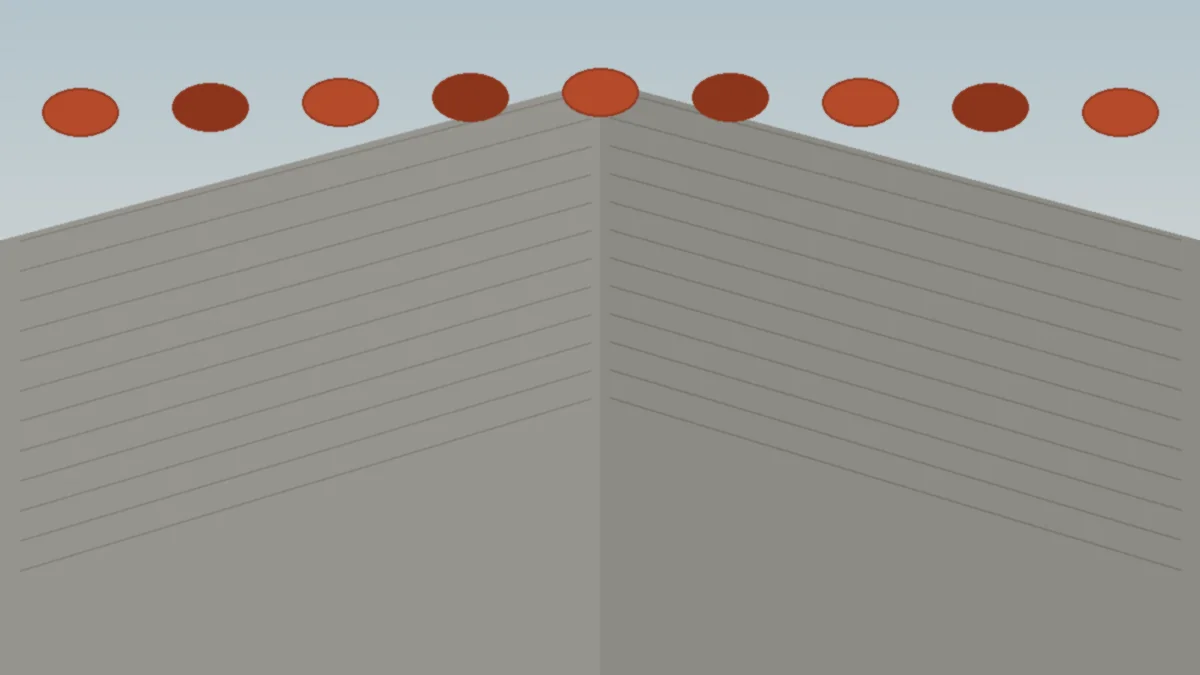
A dry ridge uses a ridge roll or union, mechanically fixed ridge tiles, and a ventilated or closed detail as specified. It does not depend on a mortar bed for its strength. Taking the old ridge off is also a chance to look at the head of the rafters and the underlay — something that should be done, not skipped.
Typical UK guide rates are sometimes quoted per metre, often in a modest band such as £20 to £50 per metre for the ridge work itself, or as a lump sum once access is included. Those are guide figures, not a menu price. Access, the length of the ridge and the tile profile all move the job.
Verges as well as ridges
The gable verge takes a similar beating. Mortar-bedded or poorly boarded verges can lift, crack or let water into the gable wall. Dry verge systems cap and fix that edge, and they have to suit the tile or slate profile. This is not a one-size extrusion for every roof.
Not a substitute for a tired covering
If the tiles or slates below the ridge are already at the end of their life, a smart new ridge will not transform the roof. We will say when a dry ridge is a self-contained upgrade and when it should sit inside a larger re-roof. After a storm, making the roof safe comes first; the lasting ridge decision can follow, as described under emergency repairs.
If your ridge tiles have moved, send a photograph and a postcode via the quote form, or call 07712 442155. We would rather look at it than re-bed the same mortar detail on habit.